


Top Ten Best Researched Herbs
Beautiful to behold in nature, many plants have been used medicinally
for thousands of years. Here are ten proven medicinal herbs that
scientists have tested in clinical studies. Few people are aware of the
multitude of scientific studies done on plants. This information should
not be used as medical advice.
for thousands of years. Here are ten proven medicinal herbs that
scientists have tested in clinical studies. Few people are aware of the
multitude of scientific studies done on plants. This information should
not be used as medical advice.

"If we were to design a drug that had perfect properties according to what
we know about heart disease and associated risk factors, we couldn't i
mprove on garlic," says Amanda McQuade-Crawford, herbalist and director
of the Ojai Center of Phytotherapy in Ojai, Calif. Regular use of garlic
is associated with the prevention of cardiovascular disease, she explains.
Garlic raises protective HDLs (high-density lipoproteins), while it lowers
harmful LDLs (low-density lipoproteins) and triglycerides (blood fats).
Garlic is also known to help lower high blood pressure, she says. Garlic
aids in cancer prevention by raising the body's level of glutathione
transferase, a liver enzyme known to detoxify the body of carcinogens,
says McQuade-Crawford. In China, researchers found gastric cancer
was reduced where garlic intake was high. Other researchers have
noted improved helper/suppressor ratios of T-cells in AIDS patients
who take garlic. Proven to work against various micro-organisms
including bacteria resistant to antibiotics, garlic is known to be antifungal
and antiviral, she adds.

The berries of this flowering shrub are best used for the heart, says
McQuade-Crawford. Hawthorn aids the heart's pumping action by opening t
he coronary arteries to nourish the heart muscle. The herb can also slow
a rapid heart rate and strengthen a failing heart. Hawthorn usually lowers
high blood pressure, especially a raised diastolic high blood pressure, and
it benefits low blood pressure due to weak heart muscles with
arrhythmia (irregular heart rhythm).
"Hawthorn takes a long time to do its best -- six months or longer. In the
style of a true herbal tonic, it can be taken safely and effectively over time
for its best effects," notes McQuade-Crawford.
style of a true herbal tonic, it can be taken safely and effectively over time
for its best effects," notes McQuade-Crawford.

Ginkgo Biloba extract from the ginkgo tree has been shown to benefit
visual function by improving microcirculation to the eyes especially
among patients suffering from senile macular degeneration, a
common condition thought to involve free radical damage, says S
teven Schechter, N.D., author of Fighting Radiation & Chemical
Pollutants With Foods, Herbs &Vitamins (Vitality, Ink).
More than 280 scientific studies indicate standardized ginkgo extract
prevents and/or benefits ailments such as vertigo, tinnitus, inner
ear disturbances, memory impairment, ability to concentrate,
anxiety, depression, neurological disorders, senility, circulatory
disorders, edema and Raynaud's disease (a vascular disorder). Ginkgo
extract improves the quality and increases the quantity of capillary
circulation, thus increasing blood flow to the brain, heart and tissues in
organs and glands, Schechter says. In addition, he notes, the flavonoids
in ginkgo are potent free radical scavengers.

Also known in Chinese as ma huang, ephedra may be the world's oldest
herb cultivated for medicinal purposes, dating back nearly 5,000 years,
says McQuade-Crawford. It's commonly used in cold formulas as
a decongestant.
herb cultivated for medicinal purposes, dating back nearly 5,000 years,
says McQuade-Crawford. It's commonly used in cold formulas as
a decongestant.
"Ephedra is a great bronchial dilator," McQuade-Crawford says. It helps
asthma sufferers by opening the sinus passages and has an
antihistamine effect which aids chronic and acute allergies. Ephedra also
acts as a circulatory stimulant to blood pressure and heart function;
it elevates blood pressure. Ephedra's main constituent is ephedrine,
which increases adrenaline secretion in our bodies. The boost you get
from ephedra stimulates certain glands, muscles and tissue functions,
while it suppresses others.
"In the long term, ephedra's adrenaline overdrive can lead to chronic
stress and even to degenerative disease," warns McQuade-Crawford.
She notes this is important for people using ephedra for dietary weight loss
or "pep pill" purposes because the effects of ephedra linger in the body long after the herb is gone. "Ephedra shouldn't be used with drugs for the heart or for the lungs and never with antidepressant drugs. It's not for use with the weak or the ill and when used long term, dosages should be conservative," McQuade-Crawford cautions.

Licorice has been most recently researched as an antiviral and in
the treatment of gastrointestinal ulceration, explains McQuade-Crawford.
Its soothing, anti-inflammatory and relaxing actions help smooth muscles in
the gastrointestinal tract on contact. "Licorice gets into a painful, contracted, tight digestive tract and coats the raw places, relaxes the clenched-up
muscles and acts as a local anti-inflammatory," she says. Licorice
also increases bile secretion. Licorice is indicated for any
gastrointestinal ulcers, including mouth ulcers. The root is indicated for
chronic coughs and bronchitis as a soothing decongestant. It's also indicated
in small amounts to reduce sugar cravings.
The Chinese often use licorice to improve the taste and the effects of
other herbs in complex formulas. Japanese research has shown licorice
to decrease high testosterone levels in women with ovarian cysts and
to increase their fertility. Large amounts of licorice or long-term use
raises blood pressure in some people.
other herbs in complex formulas. Japanese research has shown licorice
to decrease high testosterone levels in women with ovarian cysts and
to increase their fertility. Large amounts of licorice or long-term use
raises blood pressure in some people.
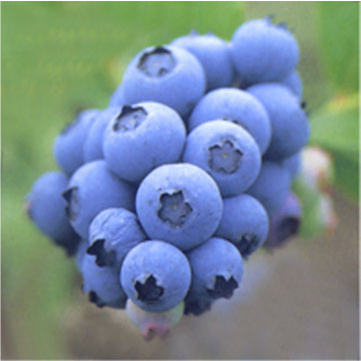
A strong antioxidant, bilberry benefits your circulatory system, eyes,
heart and brain, and helps generate overall good health, says
Schechter. Bilberry fruit contains a type of flavonoid called
anthocyanosides, which are responsible for increasing flexibility of c
apillaries and increasing blood flow.
heart and brain, and helps generate overall good health, says
Schechter. Bilberry fruit contains a type of flavonoid called
anthocyanosides, which are responsible for increasing flexibility of c
apillaries and increasing blood flow.
Research shows that standardized extract of bilberry can enlarge range
of vision and improve sharpness of images, enhance ability to focus,
and improve blurred vision, eyestrain and nearsightedness. Bilberry
extract also helps strengthen coronary arteries and helps
prevent atherosclerosis and venous insufficiency, which causes swollen
ankles and feet. "Since adding bilberry to my own health program, I've
noticed my muscles seem to recover slightly faster, I experience less
muscular pain and my vision has improved from 20/100 to
approximately 20/50," says Schechter.

Decades of research prove echinacea's value for aiding the immune
system, Schechter explains. Studies have determined echinacea's ability
to activate white blood cells and stimulate the regeneration of the
cellular connective tissue and the epidermis. Schechter notes that
echinacea's infection-fighting properties stem from its ability to neutralize
a harmful enzyme involved in the infection process. Echinacea also
increases two vital components of your immune system that consume
and eliminate invading organisms and foreign particles.
German studies have shown echinacea extract contains proteins that
help protect noninfected cells against viral infections, one reason
why echinacea is regarded as an influenza preventor. Another German
study found echinacea effective in allergy treatment because it helps
prevent tissue inflammation due to harmful foreign toxins.
help protect noninfected cells against viral infections, one reason
why echinacea is regarded as an influenza preventor. Another German
study found echinacea effective in allergy treatment because it helps
prevent tissue inflammation due to harmful foreign toxins.

"I consider standardized milk thistle seed extract the most beneficial
herbal product for liver detoxification, regeneration and protection, and,
in general, one of the most universally necessary herbal products for
the 1990s," says Schechter. He notes that the stress of toxins from
chemical pollutants, pharmaceuticals, alcohol, tobacco smoke, drugs
and different forms of radiation have cumulative side effects that need
to be addressed.
More than 120 scientific studies have shown that milk thistle
extract regenerates, regulates and strengthens liver functions. Because
free radicals attack the liver, primarily the fat tissue in the liver,
the antioxidant qualities of milk thistle are extremely beneficial. Milk
thistle stimulates your body to produce superoxide dismutase, which is one
of two primary antioxidants the body can manufacture.

Astragalus has been used as an immunity booster in China for nearly
4,000 years, according to Rob McCaleb, founder of the Herb
Research Foundation in Boulder, Colo. Astragalus extracts can increase
immune system efficiency by increasing immune activity. One study found
that astragalus extracts could increase the impaired immune function of
blood cells up to and sometimes beyond normal cell ability.
According to Planetary Herbology (Lotus Press) by Michael Tierra,
N.D., astragalus helps strengthen digestion, raise metabolism, strengthen
the immune system and promote wound healing. It can also treat
chronic weakness of the lungs, shortness of breath, low energy, prolapse
of internal organs, spontaneous sweating, chronic lesions and
deficiency edema.
N.D., astragalus helps strengthen digestion, raise metabolism, strengthen
the immune system and promote wound healing. It can also treat
chronic weakness of the lungs, shortness of breath, low energy, prolapse
of internal organs, spontaneous sweating, chronic lesions and
deficiency edema.

Ginseng is one of the most widely studied herbs, having been the subject
of more than 3,000 scientific studies to investigate how ginseng helps
improve a person's physical and/or mental performance, notes
McCaleb. Studies have shown ginseng helps increase memory and learning
by improving circulation. It's also been shown to reduce cholesterol
and protect the liver from toxins. Ginseng, according to Tierra, is known
to strengthen the lungs, nourish body fluids and calm the spirit. It may be
used for shock, collapse and heart weakness, as well as for
promoting longevity and increasing resistance to disease.
A Japanese study showed cancerous liver cells could be reverted to
normal cells in a Petri dish culture when treated with Panax ginseng
extract. Siberian ginseng has also been shown to stimulate the immune system.
normal cells in a Petri dish culture when treated with Panax ginseng
extract. Siberian ginseng has also been shown to stimulate the immune system.


No comments:
Post a Comment